
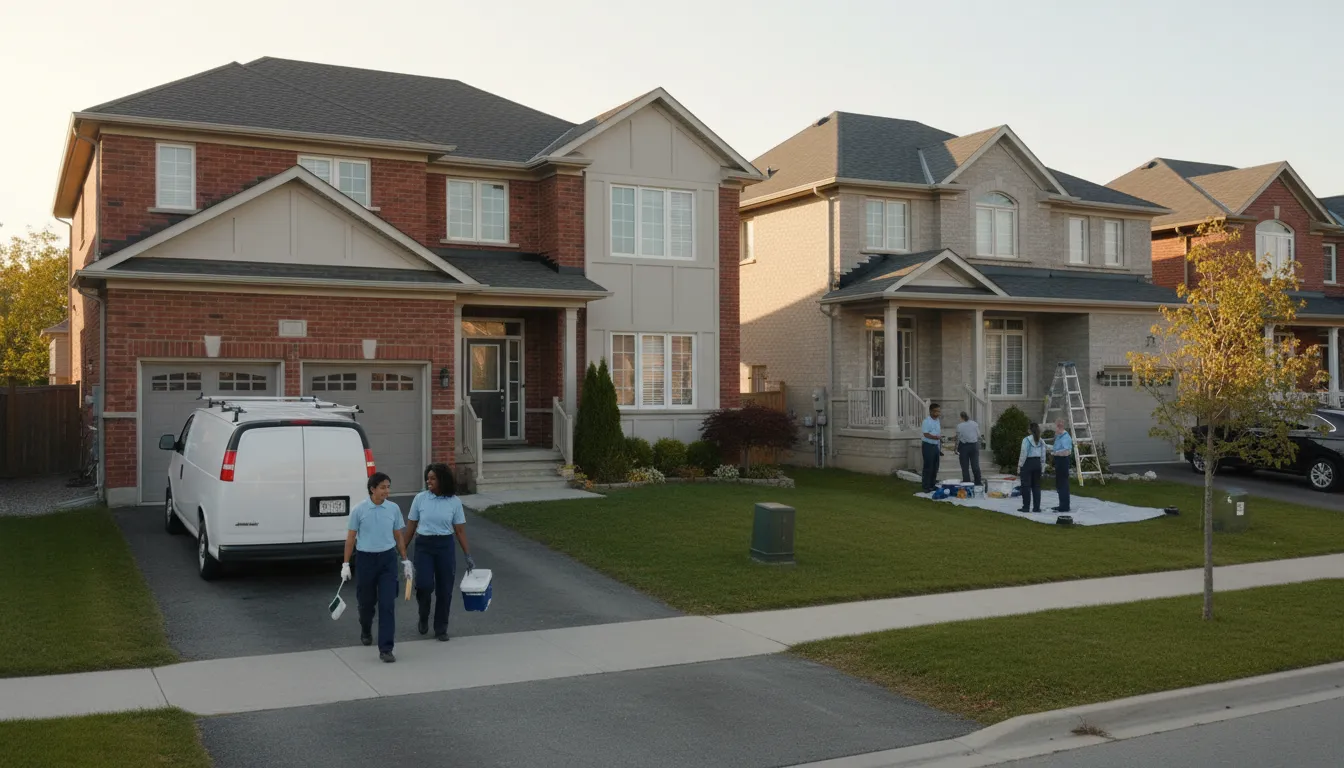
Toronto Painting Contractors Who Treat Every Wall Like a System
We diagnose substrate condition, moisture, and prior coating failures before a brush ever touches your home — across Toronto and the surrounding GTA.
Free estimates · Same-day service available · No obligation
Why Toronto Homes Need a Different Painting Approach
The GTA's housing stock spans century-old brick semis in the east end to precast concrete high-rises downtown to new-build vinyl and Hardie board in the 905. Each substrate absorbs moisture, expands, and ages differently, and each one fails in its own way if the wrong primer or coating goes on top.
Freeze-thaw cycling
Toronto winters swing through 0°C repeatedly between November and March. Water trapped in a porous or poorly sealed substrate expands on freezing and can delaminate coatings applied without proper moisture testing.
Older housing stock
Pre-1960s homes in neighbourhoods like Leslieville, the Junction, and Riverdale often carry multiple historic paint layers, some lead-containing, that require different prep protocols than a new-build.
Lake-effect humidity
Proximity to Lake Ontario keeps summer humidity elevated, which slows coating cure times and affects recoat windows if the crew isn't tracking conditions.
New-build siding and drywall
Subdivisions across the 905 use engineered siding and fresh drywall that need specific primers to seal off-gassing and control sheen uniformity.
Most Paint Failures Are Prep Failures, Not Paint Failures
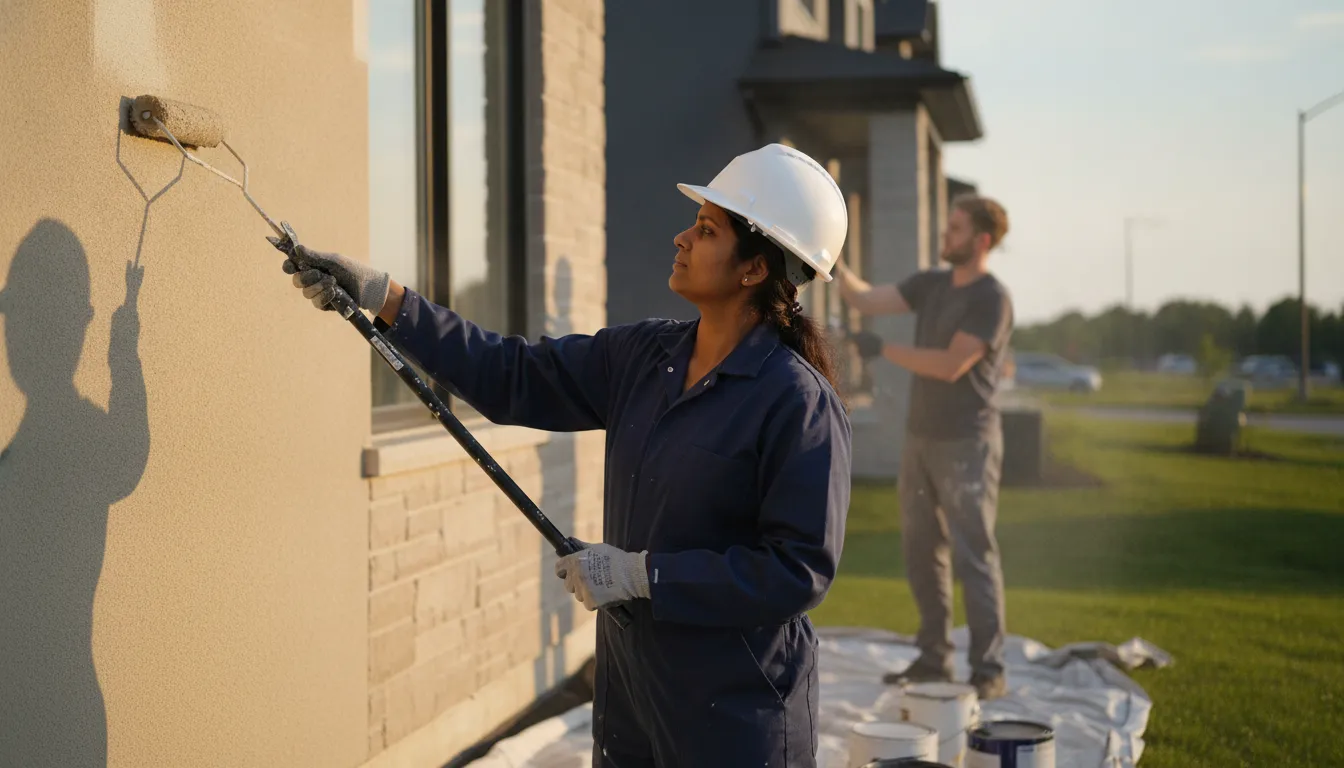
When a homeowner calls about peeling, blistering, or early fading, the coating itself is rarely the root cause. It's almost always inadequate cleaning, unaddressed moisture, skipped priming, or a topcoat applied outside its recommended temperature and humidity range. In the GTA's climate swings, these shortcuts show up within one or two seasons rather than the five-plus years a properly prepped job should deliver.
We Diagnose Before We Coat
Every project starts with a substrate assessment: moisture readings on exterior wood and stucco, adhesion testing on existing coatings, and a check for efflorescence on masonry. We select primers and topcoats matched to that substrate and to the season we're painting in, then document the process so you know exactly what went into your walls.
Painting done to spec, from prep to final coat
A paint job fails at the prep stage, not the finish. We control surface preparation, adhesion and cure conditions so the coating performs through Toronto's freeze-thaw cycles and humid summers. The result holds up because the process is sound.
Cabinet Painting & Refinishing
Cabinet finishes fail from poor degreasing and adhesion on their high-touch surfaces. We clean, de-gloss and use a bonding primer, then apply a durable topcoat that cures hard enough for daily kitchen use.
Learn moreCommercial Painting Contractor
We schedule around your operations and specify coatings rated for the traffic and wear of the space. Proper surface prep and cure timing prevent the early failures that force premature recoating.
Learn moreDeck & Fence Staining
Stain fails when applied to damp or unprepared wood, so we check moisture content, clean and sand first. The right penetrating product sheds water and slows the UV greying that Ontario sun causes.
Learn moreDrywall Repair & Prep
Visible seams and cracks trace back to improper taping and inconsistent mud. We tape, coat and sand to a uniform surface, then prime, because paint reveals every flaw a proper prep would have removed.
Learn moreExterior Painting
Exterior coatings fail through moisture and UV, so we scrape, prime bare wood, and apply within the manufacturer's temperature and humidity window. Correct film thickness is what resists our freeze-thaw cycles.
Learn moreInterior Painting
We clean, patch and prime surfaces so the topcoat bonds properly rather than peeling at stress points. Controlling dust and cure conditions gives an even film with no roller marks or flashing.
Learn moreWallpaper Removal & Installation
We remove old paper and adhesive fully, then prime, since residue causes bubbling and poor bonding later. For installation, correct surface sizing and seam alignment prevent lifting at the edges over time.
Learn moreAn Engineering Mindset Applied to Paint
We approach every project the way a building inspector would: identify the failure mechanism, correct the underlying condition, then apply the finish.
Moisture testing as standard practice
We check moisture content on exterior wood and masonry before priming, not after a callback.
Manufacturer data sheets, not habit
Coating selection is matched to the specific substrate and exposure, referencing manufacturer specs for cure and recoat windows.
Season-aware scheduling
We track temperature and humidity windows so coatings cure the way they're engineered to.
Full-surface prep protocols
Scraping, sanding, spot-priming, and caulking are scoped and priced as their own line item, never bundled away.
Low-VOC and low-odour options
For occupied homes and offices, we can spec coatings that reduce off-gassing during and after application.
Clear written scope
You receive a written breakdown of surfaces, prep steps, and products before work begins, not a verbal estimate.
How a Project Runs, Start to Finish
The same sequence applies whether it's a single room or a full exterior repaint.
- 1
Assessment and quote
We walk the property, note substrate condition, moisture, and any prior coating issues, then send a written quote scoped by surface.
- 2
Prep and protection
Furniture, flooring, and landscaping are protected. Surfaces are cleaned, scraped, sanded, and spot-primed as required.
- 3
Priming
Primer is matched to substrate type and any stain, tannin, or moisture conditions identified during assessment.
- 4
Coating application
Topcoats are applied within manufacturer-recommended temperature and humidity ranges, using the coverage rates specified on the data sheet.
- 5
Final walkthrough
We inspect sightlines, edges, and touch-ups with you before calling the project complete.
Common Questions About Painting in the GTA
Do you work in older Toronto homes with multiple paint layers?
Yes. Century homes and older semis across Toronto often carry several historic coating layers. We test for lead where the home's age warrants it and follow appropriate containment and disposal practices before repainting.
What time of year is best for exterior painting in the GTA?
Most exterior coatings need sustained temperatures above roughly 10°C and moderate humidity to cure properly, which typically puts the window from late spring through early fall in this region. We track forecasts closely for any exterior project.
Can you match new paint to existing colour on an older home?
We can colour-match closely, though older coatings fade and chalk over time, so a small variance is sometimes unavoidable on partial repaints. We'll flag this during the estimate if it applies to your project.
Do you handle both interior and exterior work?
Yes, we offer interior painting, exterior painting, cabinet refinishing, deck and fence staining, drywall repair, wallpaper services, and commercial painting.
How do I get a quote?
Request a free quote through our contact page and we'll follow up by email to schedule an assessment.
5 regions across the GTA
Serving the Entire Greater Toronto Area
5 regions, 29 communities — wherever you are in the GTA, House Painters Toronto is close by. Pick your area to see how we can help.
Ready to Talk Through Your Project?
Reach out and we'll schedule an assessment tailored to your home or property.
Email Us for a Free EstimateWeather sets your painting window — email us to plan the job.
Fall painting conditions in Toronto, ON
Fall around Toronto, ON offers stable, moderate temperatures that are perfect for exterior painting — getting it done now protects your siding and trim through winter.
Proudly Serving Toronto, ON
Local, on-time service throughout Toronto and the surrounding area.